

The Trump Administration has recently imposed high tariffs on over 60 nations, citing they will focus U.S. consumer purchases towards American-made products while simultaneously raising investments to America. A 10% tariffs have been placed on most countries, but are currently on a 90-day pause, while Chinese products currently face 145% tariffs from the U.S., but are being reciprocated by China at 125% on U.S. goods.
While Americans are already experiencing higher prices and reduced availability of some products, students are feeling them in other ways–within
their jobs.
Right now, the food industry is being hit hard by tariffs.
Increased prices for certain ingredients, especially coffee and specialized international items are making it hard for restaurants to keep their prices low
for customers. Junior Andrew Banks and senior Duha Haj-Assaad understand the struggle.
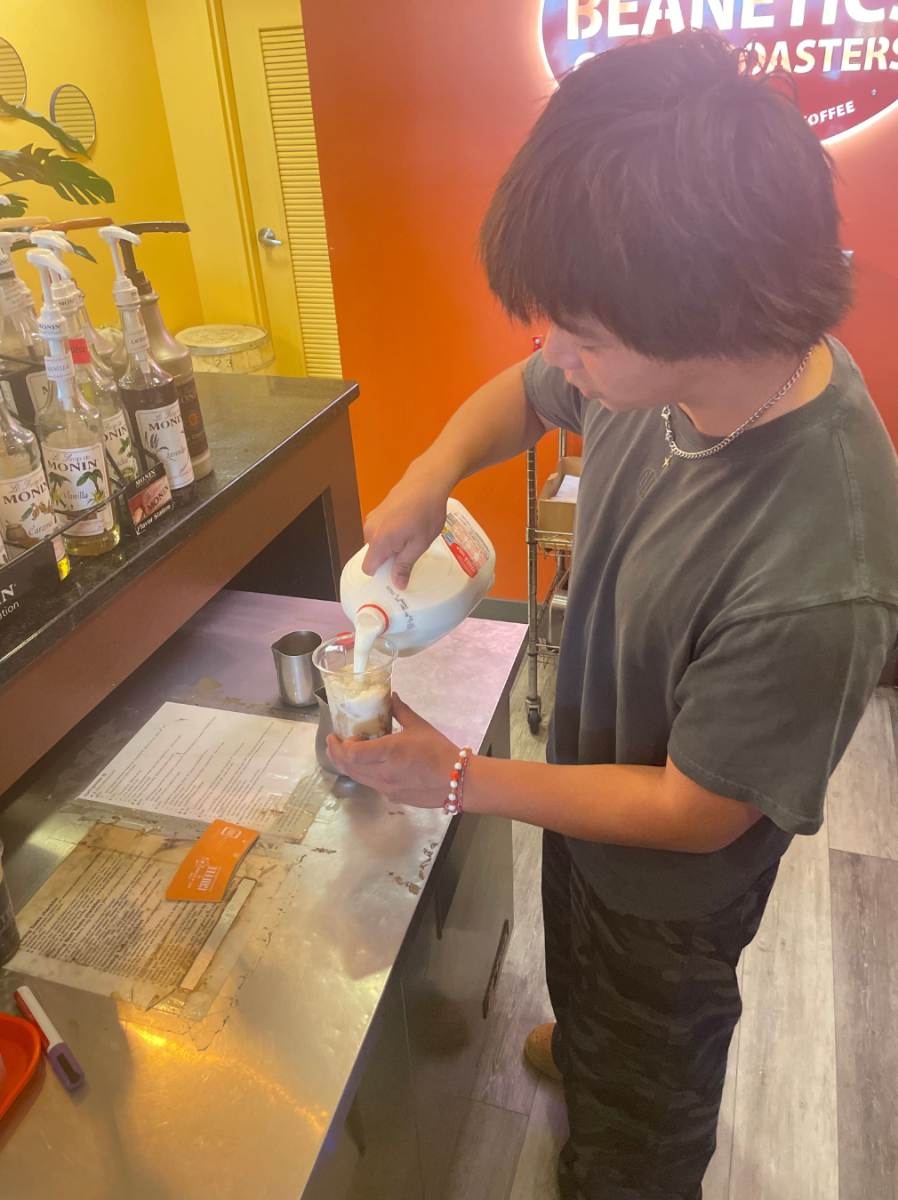
Banks, a barista at Beanatics in Annandale describes he, “felt the effects around December. Bean prices were increasing and customers were increasingly unsatisfied with the prices. Our biggest exports are from Indonesia and South America and this combined with a bad crop outcome increased the bean prices a lot,” he said.
Alternatively, Haj-Assaad describes the effects tariffs have had on her family-owned Mediterranean restaurant Raouche Cafe in Falls Church:
“The increasing costs have clearly reduced their profit margins. They haven’t raised prices significantly since they want to keep it affordable for our customers, but it means less take-home pay. It has caused some tension at home, especially because other bills are also rising,” she said.
The largest worry for businesses at this point of the Trump Administration is the unknown of whether tariffs will continue to rise and possibly turn away customers as they budget more tightly.
“Because of this uncertainty, businesses are going to approach planning for the future with less optimism, so they will take on less risk, which will most likely mean cutting costs,” Economics teacher Andrew Freeman said.
As more students working in different industries feel the effects of tariffs, remaining informed on developments provides crucial insight to the future of their jobs.
“We’ve worked hard to get where we are today, so we’ll stay hopeful and won’t let the tariffs affect us. I hope the tariffs go down and things get easier for small businesses like ours, because we all truly deserve it,” Haj-Assaad said.